

Vat YouTube-podcasts samen en bespaar uren
Vat YouTube-podcasts samen en bespaar uren
Genereer transcripties,
samenvattingen en vertalingen van je favoriete YouTube-podcasts
Transcript
Summary
EN
Short Description:
Tal Ben-Shahar explains that true happiness isn’t about avoiding pain but embracing challenges to grow stronger — a concept called antifragility. Instead of directly chasing happiness, which can backfire, we should focus on five key areas: spiritual purpose, physical recovery, intellectual curiosity, strong relationships, and emotional resilience. By cultivating these, we indirectly increase happiness and learn to make the best of life's hardships.
Timestamped Summary:
00:00 - 00:26 – Happiness Misconception: Painful emotions are unavoidable; only psychopaths or the dead feel no pain. Happiness doesn’t mean constant



Ontdek de kracht
van Scripsy AI
Ontdek de kracht
van Scripsy AI


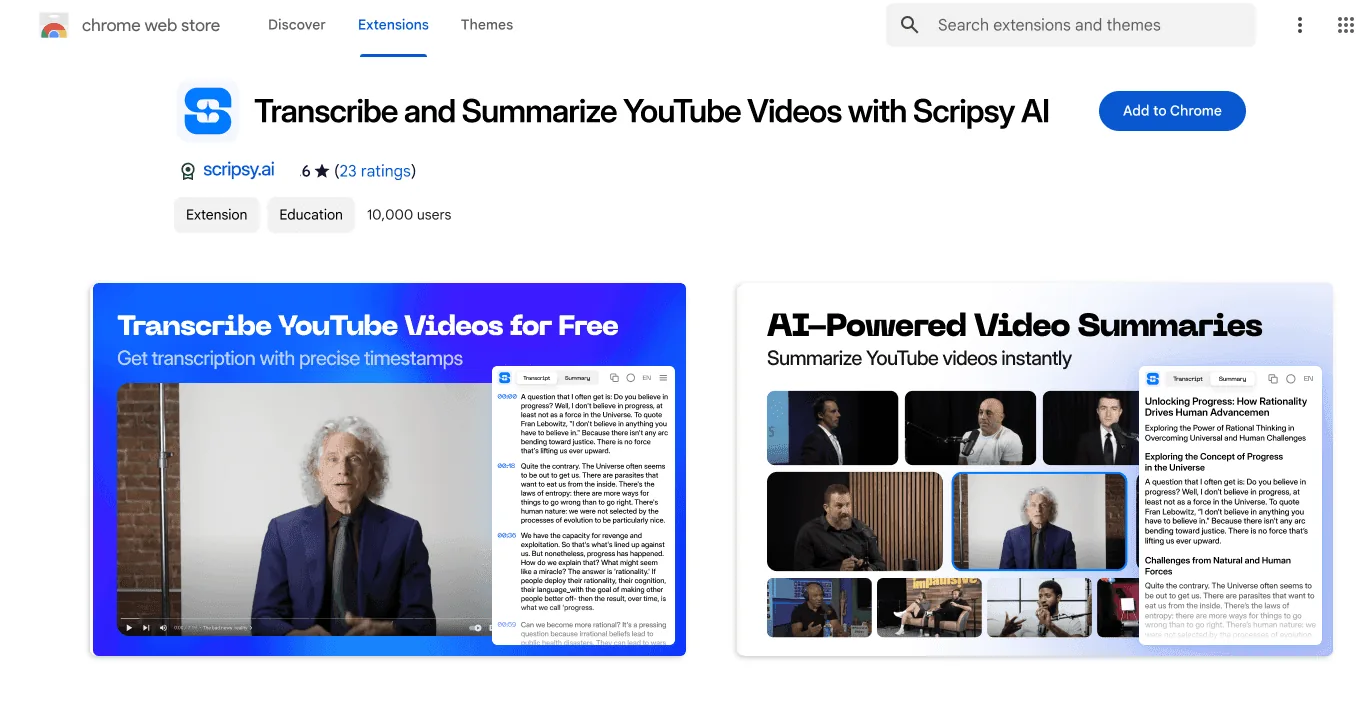
YouTube-video's gratis transcriberen
YouTube-video's gratis transcriberen
Zet elke video om in tekst met precieze tijdstempels. Gratis. Altijd.
Zet elke video om in tekst met precieze tijdstempels. Gratis. Altijd.
Transcript
Summary
EN
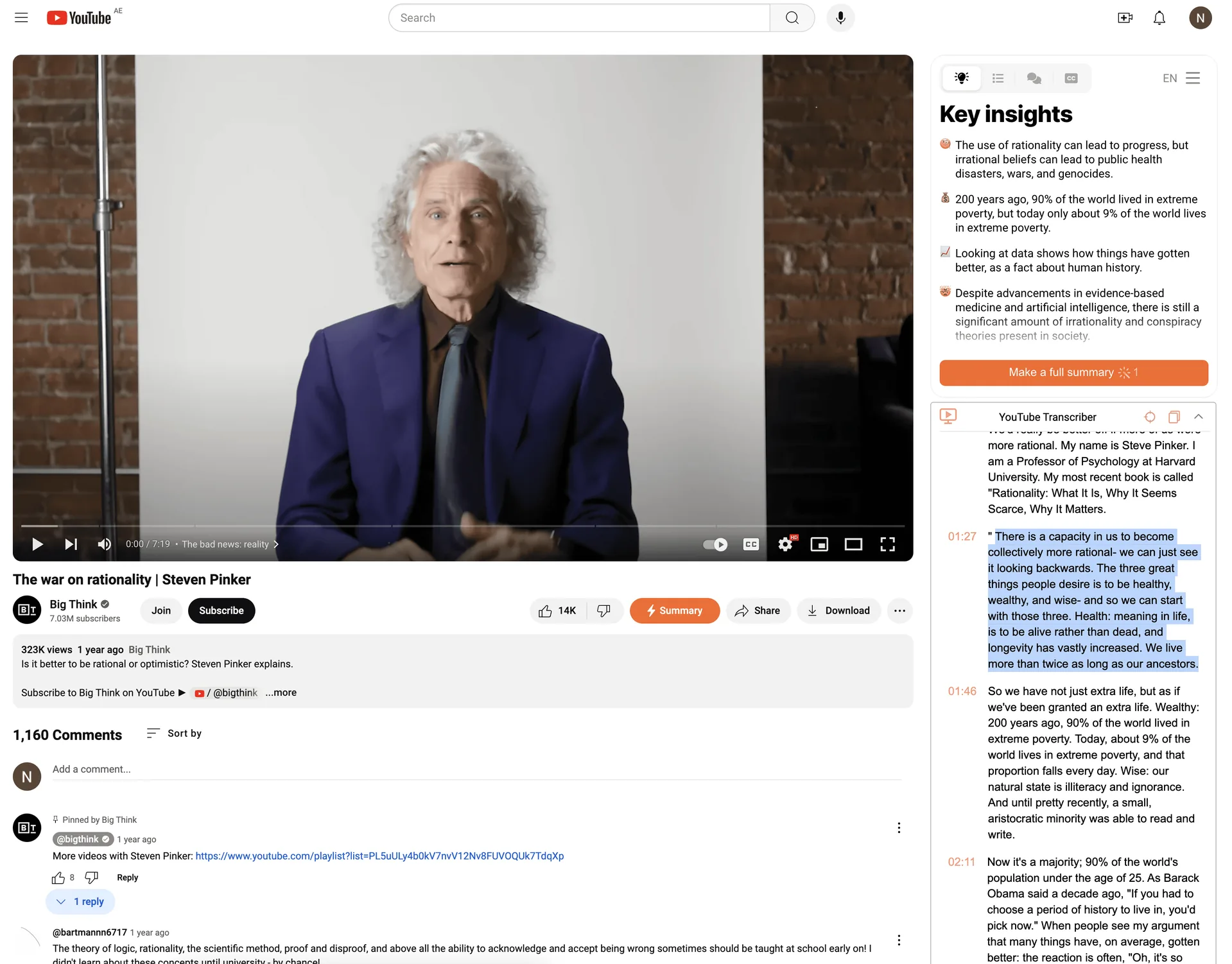
00:00
A question that I often get is: Do you believe in progress? Well, I don't believe in progress, at least not as a force in the Universe. To quote Fran Lebowitz, "I don't believe in anything you have to believe in." Because there isn't any arc bending toward justice. There is no force that's lifting us ever upward.
00:18
Quite the contrary. The Universe often seems to be out to get us. There are parasites that want to eat us from the inside. There's the laws of entropy: there are more ways for things to go wrong than to go right. There's human nature: we were not selected by the processes of evolution to be particularly nice.
00:36
We have the capacity for revenge and exploitation. So that's what's lined up against us. But nonetheless, progress has happened. How do we explain that? What might seem like a miracle? The answer is 'rationality.' If people deploy their rationality, their cognition, their language_with the goal of making other people better off- then the result, over time, is what we call 'progress.
00:59
Can we become more rational? It's a pressing question because irrational beliefs lead to public health disasters. They can lead to wars and genocides. We'd really be better off if more of us were more rational. My name is Steve Pinker. I am a Professor of Psychology at Harvard University. My most recent book is called "Rationality: What It Is, Why It Seems Scarce, Why It Matters.
01:27
There is a capacity in us to become collectively more rational — we can just see it looking backwards. The three great things people desire is to be healthy, wealthy, and wise- and so we can start with those three. Health: meaning in life, is to be alive rather than dead, and longevity has vastly increased. We live more than twice as long as our ancestors.
01:46
So we have not just extra life, but as if we've been granted an extra life. Wealthy: 200 years ago, 90% of the world lived in extreme poverty. Today, about 9% of the world lives in extreme poverty, and that proportion falls every day. Wise: our natural state is illiteracy and ignorance. And until pretty recently, a small, aristocratic minority was able to read and write.

Transcript
Summary
EN
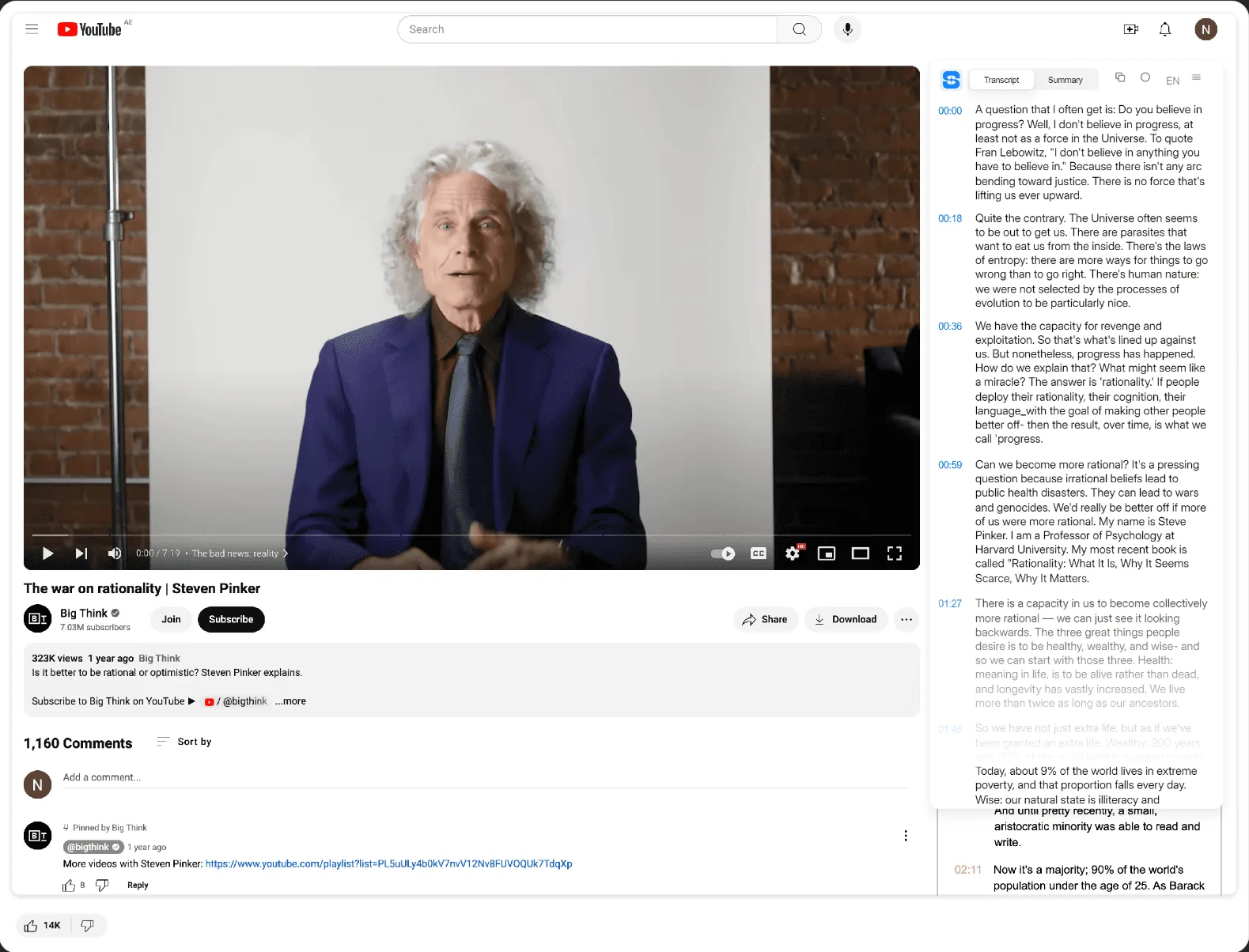
00:00
A question that I often get is: Do you believe in progress? Well, I don't believe in progress, at least not as a force in the Universe. To quote Fran Lebowitz, "I don't believe in anything you have to believe in." Because there isn't any arc bending toward justice. There is no force that's lifting us ever upward.
00:18
Quite the contrary. The Universe often seems to be out to get us. There are parasites that want to eat us from the inside. There's the laws of entropy: there are more ways for things to go wrong than to go right. There's human nature: we were not selected by the processes of evolution to be particularly nice.
00:36
We have the capacity for revenge and exploitation. So that's what's lined up against us. But nonetheless, progress has happened. How do we explain that? What might seem like a miracle? The answer is 'rationality.' If people deploy their rationality, their cognition, their language_with the goal of making other people better off- then the result, over time, is what we call 'progress.
00:59
Can we become more rational? It's a pressing question because irrational beliefs lead to public health disasters. They can lead to wars and genocides. We'd really be better off if more of us were more rational. My name is Steve Pinker. I am a Professor of Psychology at Harvard University. My most recent book is called "Rationality: What It Is, Why It Seems Scarce, Why It Matters.
01:27
There is a capacity in us to become collectively more rational — we can just see it looking backwards. The three great things people desire is to be healthy, wealthy, and wise- and so we can start with those three. Health: meaning in life, is to be alive rather than dead, and longevity has vastly increased. We live more than twice as long as our ancestors.
01:46
So we have not just extra life, but as if we've been granted an extra life. Wealthy: 200 years ago, 90% of the world lived in extreme poverty. Today, about 9% of the world lives in extreme poverty, and that proportion falls every day. Wise: our natural state is illiteracy and ignorance. And until pretty recently, a small, aristocratic minority was able to read and write.

Videosamenvattingen met AI
Videosamenvattingen met AI
Vat video's in seconden samen met beknopte AI-samenvattingen
Vat video's in seconden samen met beknopte AI-samenvattingen
Transcript
Summary
EN
Unlocking Progress: How Rationality Drives Human Advancemen
Exploring the Power of Rational Thinking in Overcoming Universal and Human Challenges
Exploring the Concept of Progress
in the Universe
A question that I often get is: Do you believe in progress? Well, I don’t believe in progress, at least not as a force in the Universe. To quote Fran Lebowitz, “I don’t believe in anything you have to believe in.” Because there isn’t any arc bending toward justice. There is no force that’s lifting us ever upward.
Challenges from Natural and Human Forces
Quite the contrary. The Universe often seems to be out to get us. There are parasites that want to eat us from the inside. There’s the laws of entropy: there are more ways for things to go wrong than to go right. There’s human nature: we were not selected by the processes of evolution to be particularly nice. We have the capacity for revenge and exploitation. So that’s what’s lined up against us.
How Rationality Explains Human Advancement
But nonetheless, progress has happened. How do we explain that? What might seem like a miracle? The answer is ‘rationality.’ If people deploy their rationality, their cognition, their language with the goal of making other people better off, then the result, over time, is what we call ‘progress.’
Post-Match Thoughts
• Reflections on the outcome and what it means for both teams moving forward.
• Speculation on how Team Liquid will fare against Gladiators in the grand final.
• Insights into the overall strategies and adjustments that may be needed for future matches.
Player and Team Dynamics
• Discussion on the mentality and preparation of players, including anecdotes about personal experiences and team dynamics.
• Mention of the importance of hygiene and professionalism in a team environment.
• Insights into how different players handle pressure and contribute to their team’s success.
Transcript
Summary
EN
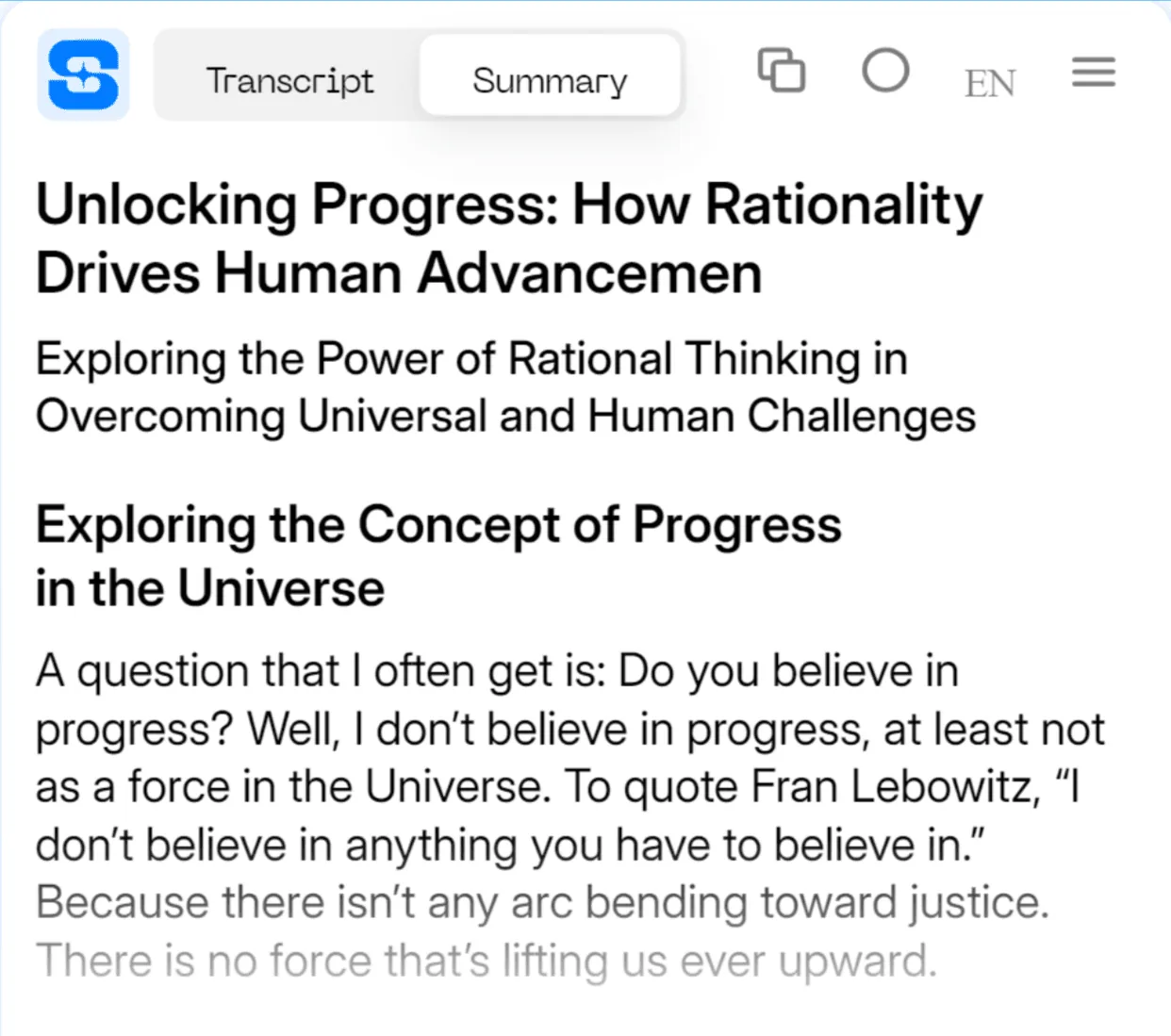
Unlocking Progress: How Rationality Drives Human Advancemen
Exploring the Power of Rational Thinking in Overcoming Universal and Human Challenges
Exploring the Concept of Progress
in the Universe
A question that I often get is: Do you believe in progress? Well, I don’t believe in progress, at least not as a force in the Universe. To quote Fran Lebowitz, “I don’t believe in anything you have to believe in.” Because there isn’t any arc bending toward justice. There is no force that’s lifting us ever upward.
Challenges from Natural and Human Forces
Quite the contrary. The Universe often seems to be out to get us. There are parasites that want to eat us from the inside. There’s the laws of entropy: there are more ways for things to go wrong than to go right. There’s human nature: we were not selected by the processes of evolution to be particularly nice. We have the capacity for revenge and exploitation. So that’s what’s lined up against us.
How Rationality Explains Human Advancement
But nonetheless, progress has happened. How do we explain that? What might seem like a miracle? The answer is ‘rationality.’ If people deploy their rationality, their cognition, their language with the goal of making other people better off, then the result, over time, is what we call ‘progress.’
Post-Match Thoughts
• Reflections on the outcome and what it means for both teams moving forward.
• Speculation on how Team Liquid will fare against Gladiators in the grand final.
• Insights into the overall strategies and adjustments that may be needed for future matches.
Player and Team Dynamics
• Discussion on the mentality and preparation of players, including anecdotes about personal experiences and team dynamics.
• Mention of the importance of hygiene and professionalism in a team environment.
• Insights into how different players handle pressure and contribute to their team’s success.

Krijg snel de kernideeën
Krijg snel de kernideeën
Zet kernideeën om in
goed gestructureerde alinea's
Zet kernideeën om in
goed gestructureerde alinea's
Transcript
Summary
new
EN
Key Ideas Breakdown
Belief in Progress
Steven Pinker addresses the question of whether he believes in progress. He cites Fran Lebowitz, expressing skepticism about progress as an inherent force in the Universe. Pinker argues that there is no natural arc bending towards justice or improvement, and he emphasizes that progress is not guaranteed.
Challenges from the Universe
Pinker describes various adversities that seem to challenge human existence. He mentions natural threats such as parasites that can harm us internally and the laws of entropy, which suggest that there are more ways for things to go wrong than right. Additionally, he points out that human nature, shaped by evolution, includes tendencies towards revenge and exploitation.


Eenvoudig te installeren
Eenvoudig te installeren
Eenvoudige Chrome-extensie die je snel installeert en gebruikt
Eenvoudige Chrome-extensie die je snel installeert en gebruikt
Krijg transcripties en
samenvattingen in 50+ talen
Krijg transcripties en
samenvattingen in 50+ talen
Krijg transcripties en
samenvattingen in 50+ talen
Gratis vertalingen van transcripties en samenvattingen in alle talen
Gratis vertalingen van transcripties en samenvattingen in alle talen
🇬🇧 English
🇨🇳 Mandarin Chinese
🇪🇸 Spanish
🇪🇸 Spanish
🇮🇳 Hindi
🇵🇹 Portuguese
🇯🇵 Japanese
🇫🇷 French
🇩🇪 German
🇰🇷 Korean
🇰🇷 Korean
🇺🇦 Ukrainian
🇹🇷 Turkish
🇨🇳 Mandarin Chinese
🇨🇳 Mandarin Chinese
Chrome-extensie installeren
Echte reviews van Scripsy:
Wat gebruikers zeggen
Reviews

Handige tool om snel de belangrijkste inzichten uit YouTube-video's te halen. De AI-samenvattingen besparen veel tijd.

Bedankt voor deze extensie! Mooie interface, makkelijk te gebruiken, makkelijk te installeren. Een must-have voor iedereen die YouTube gebruikt voor werk of studie.

Geweldige transcriptgenerator! werkt overal op youtube en geeft transcripties in verschillende talen. Ik heb veel tijd bespaard bij het kijken van lange video's en colleges, bedankt!

Super simpel in gebruik. Scripsy maakt binnen een paar seconden een transcript en een samenvatting, echt gaaf. De samenvatter bespaart enorm veel tijd bij lange podcasts en nieuwsachtige video's. Vind ik top!

Bedankt voor deze extensie! Mooie interface, makkelijk te gebruiken, makkelijk te installeren. Een must-have voor mensen die, net als ik, YouTube gebruiken voor werk of studie

Top YouTube-samenvatter met een geweldig design! Tot nu toe mijn favoriet, snel en nauwkeurig, perfect voor snelle inzichten als de video te lang is

Geweldige extensie. De beste gratis transcriptietool ooit!

De beste extensie in zijn soort tot nu toe!!! Heel erg bedankt, ga zo door💪🏻🔥

WAUW!

ik ben er veel productiever door geworden, nu is video's kijken makkelijker, bedankt!
Lees meer ervaringen

Makkelijk in gebruik en handig. Ondersteuning voor een donkere modus zou de ervaring nog beter maken.

Nosky ★★★★★
Bedankt voor deze extensie! Mooie interface, makkelijk te gebruiken, makkelijk te installeren. Een must-have voor iedereen die YouTube gebruikt voor werk of studie.

Sophie W.
De beste extensie in zijn soort tot nu toe!!! Heel erg bedankt, ga zo door💪🏻🔥

Bogdan Peregubko
Kies je abonnement om YouTube-podcasts
samen te vatten
Kies je abonnement
Gratis
Beperkte samenvattingen
$
0
/
per maand
Onbeperkte transcripties van YouTube-video's
1 gratis samenvatting per dag
Gratis starten

Maandabonnement
Onbeperkt video's transcriberen & samenvatten
$
8.99
/
per maand
Onbeperkte transcripties
Onbeperkte samenvattingen
Toegang tot nieuwe functies
Populairst
Kies dit abonnement
Jaarabonnement
Beste deal voor AI-samenvattingen
$
4.16
/
per maand
Jaarlijks gefactureerd
7 dagen gratis proberen
Onbeperkte transcripties
Onbeperkte samenvattingen
Toegang tot nieuwe functies
Extra voordelig
Bespaar 35%
Begin met een gratis proefperiode
Start je gratis proefperiode
Veelgestelde vragen
Veelgestelde vragen
Wat is Scripsy AI?
Hoe installeer ik de Scripsy Chrome-extensie voor YouTube-transcripties en -samenvattingen?
Is Scripsy gratis te gebruiken?
Is er een proefperiode voor onbeperkte samenvattingen?
Hoeveel AI-samenvattingen kan ik maken met het gratis abonnement?
Kan ik transcripties en samenvattingen in verschillende talen krijgen?
Welke video's kan ik transcriberen?
Hoe lang duurt het om een transcript te maken?
Volg ons 🫦


